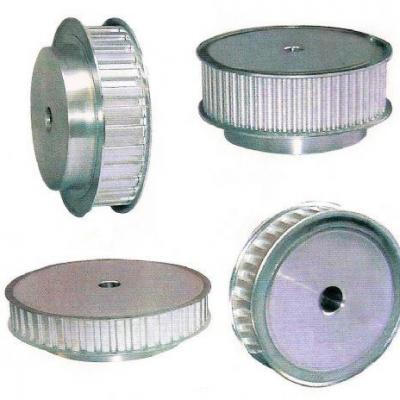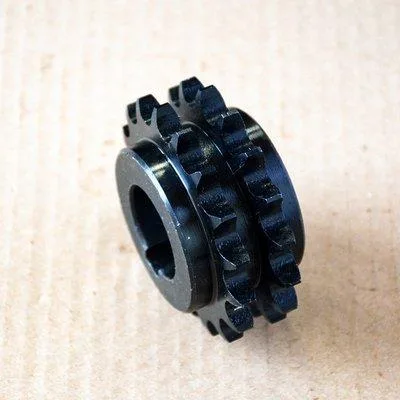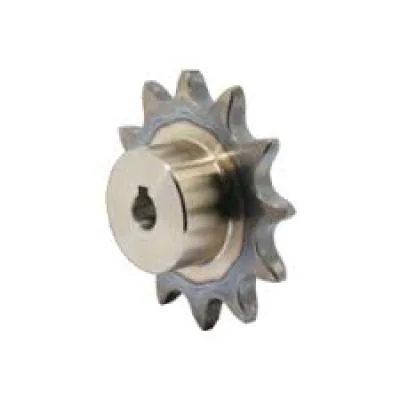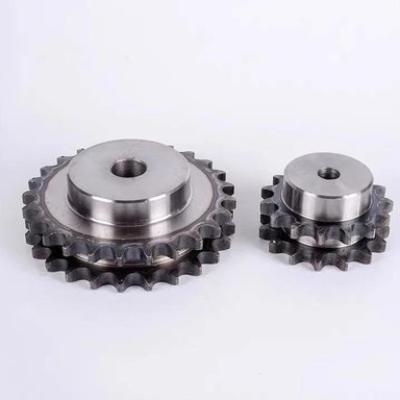
Synchronous pulley design steps and how to choose the right motor?

Nowadays, in this era of rapid industrial development, many factories have used conveyor belts when they produce products, which can quickly improve the efficiency of the production process. However, when choosing the timing belt, many people do not know how to make a correct and reasonable selection. Here I will share with you how to choose the Timing Pulley.
Motor Power Considerations
First of all, we must look at the power of the motor selection when selecting the timing pulley. Since the power of the motor is different, it is necessary to select different types of T10-66 Timing Pulley when selecting, but this choice difference is not very big. In general, we can choose more widths.
Motor Specifications and Recommendations
Secondly, the motors on the devices that usually generate electricity are basically around 30 kW, and many HTP 8M-50 Timing Pulley companies may recommend a model of the eight-M synchronous belt pulley for the design. This model is actually very wrong. Because their torque is not the same as the eight-M model of the synchronous pulley, the eight M's timing belt usually bears 70 KP, but the motor generally needs to reach one thousand KP.
Synchronous Pulley Design Steps and Motor Selection
Synchronous pulley design steps and how to choose the right motor?
First, the timing pulley can be divided into a single timing pulley and a double timing pulley.
Then, the single timing pulley has a higher contact line strength than the involute gear under the same conditions, but the bending strength is lower than that of the involute bending.
Finally, the HTP 14M-40 Timing Pulley usually use a soft tooth surface or a medium hard tooth surface, and a short tooth is usually used when a hard tooth surface is used.
Design Steps of Synchronous Pulley Drive
Now let's talk about the design steps of the synchronous pulley drive:
The first step, simplified design: According to the transmission power and input speed of the gear transmission, etc., the main parameters of the center distance, modulus and so on should be determined. If the center distance and modulus are already known, we can skip this step.
The second step, the calculation of the geometric design: we must calculate the geometric dimensions when designing and calculating the basic parameters of the gear.
The third step, the check of the strength: we must accurately check the contact strength of the tooth surface and the bending strength of the root after the basic parameters are determined.
The fourth step, if the degree of check does not meet the strength requirements, then we can return.